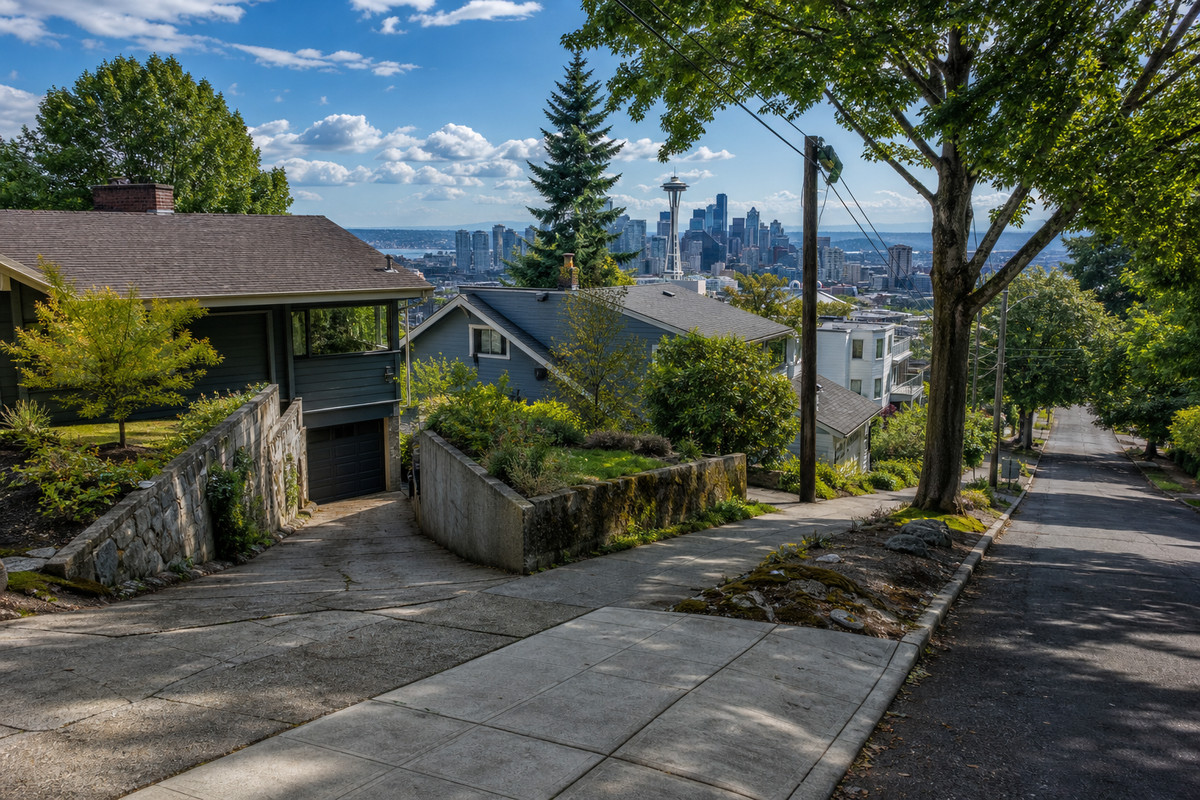
Greater Seattle, the Eastside and the South Sound
Seattle, the Eastside and the South Sound. The Seattle depot sits inside this region.
The first question for a Greater Seattle delivery is the approach. A tilt bed needs 130 feet of straight, level run to slide a 40ft container off the deck, and 110 feet for a 20ft. Grade is the second question, because this city is built on hills and a driveway a pickup climbs without noticing is a different proposition under several tons of steel on a truck deck. The ground splits cleanly too. Dense, packed glacial ground up on the ridges bears a container well, while the soft fill and peat down in the Duwamish, the Kent Valley and the Puyallup and Nisqually deltas mean blocking should be planned in advance. Traffic on the I-5 and I-405 corridors and SR-167 through the Kent Valley affects routing, and bridge and tunnel routing for a loaded truck needs planning.
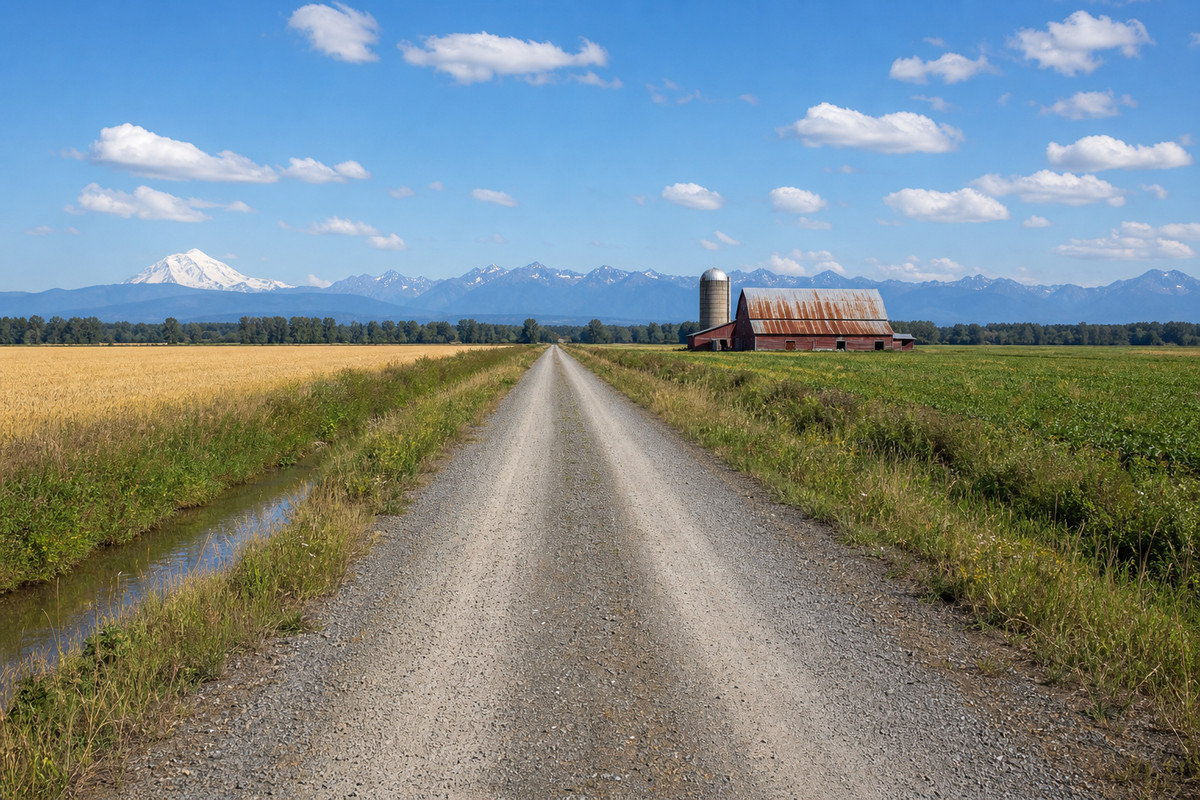
The North Sound and the Islands
Straight up I-5 from the depot, with two very different problems waiting at the end of it: river valley ground and the ferry schedule.
The two things worth planning around in the North Sound are water and water crossings. The Skagit and the Nooksack both flood, and the low roads around Conway, Fir Island, Everson and Sumas go under in a wet winter, so check the last quarter mile before a winter delivery on river bottom ground. Counties here post seasonal load limits on their own roads through the spring thaw, and while those are up a loaded truck is not going down a soft county road no matter how good the schedule looks. The islands are their own category. A commercial vehicle that is oversize or over the ordinary gross weight needs travel approval arranged with the ferry system ahead of the sailing, so island deliveries depend on the ferry schedule. Point Roberts is reachable by road only through Canada.
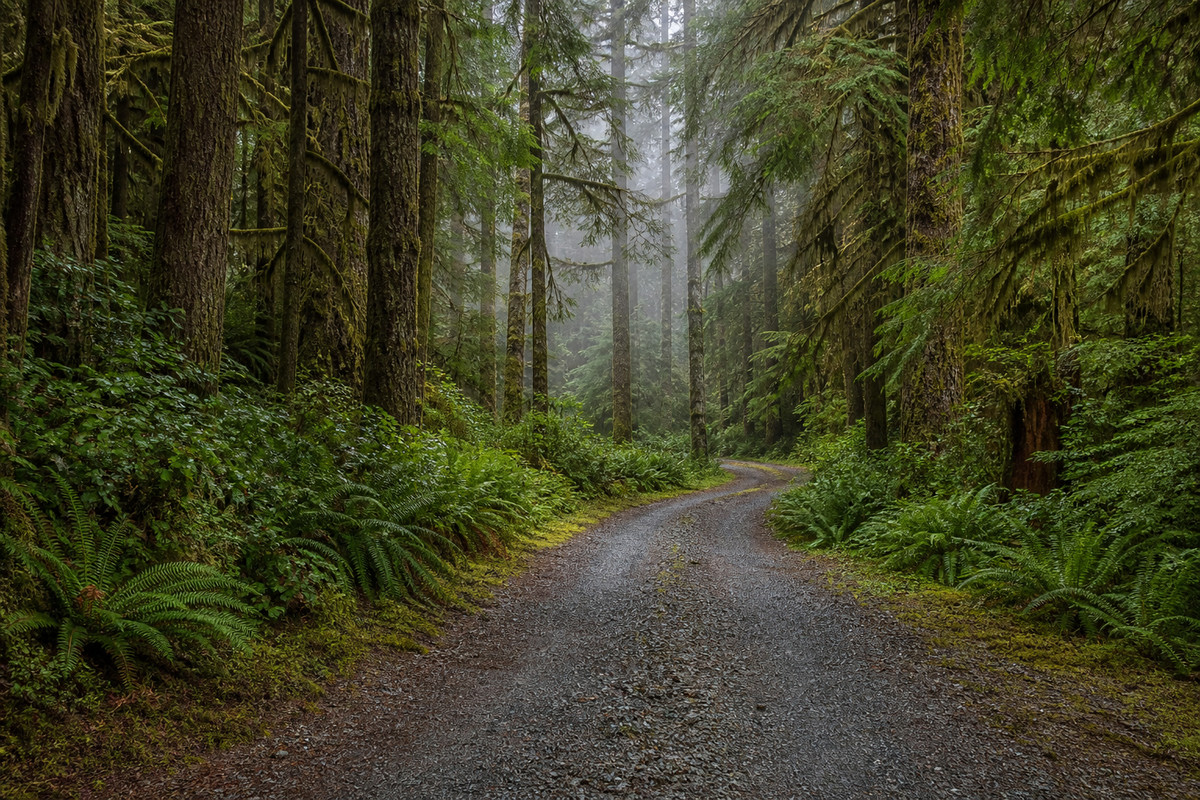
The Olympic Peninsula, Kitsap and the Coast
The region where the shortest line on the map is not always the shortest drive. The route is planned before the date is scheduled.
Bremerton is across the water from Seattle and a long way around by road, and that difference shapes how a container reaches the peninsula. Some Kitsap deliveries make sense on a ferry sailing, and plenty make far more sense around the south end through Tacoma and over the Narrows, or north over the Hood Canal Bridge, which floats and opens for marine traffic and stops road traffic while it is open. Ferry crossings such as Port Townsend to Coupeville take vehicle reservations, so the route has to be settled before a delivery date can be set. West of the Olympics the road is US-101 and there is no alternative to it, so a slide or a closure between Sequim and Forks is not a detour, it is a wait, and that wait belongs in the delivery window. Rainfall differs sharply across the peninsula. The west slope is temperate rainforest and the ground stays soft well into summer, while Sequim sits in the Olympic rain shadow and is dry. Two places on the same peninsula can need completely different site prep. On the coast from Ocean Shores down through Westport to Long Beach the constraints are soft sand, a beach approach that looks firmer than it is, and wind, so the driveway surface needs checking.
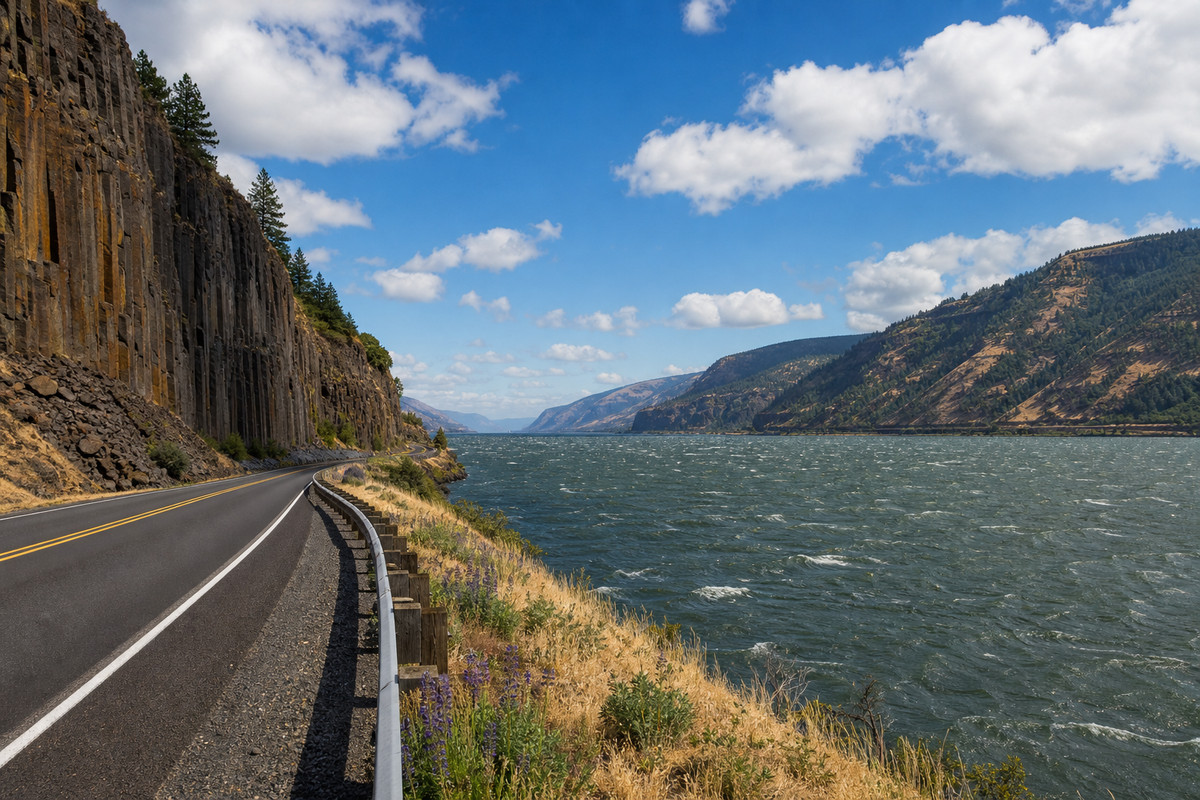
Southwest Washington and the Lower Columbia
A straight run down I-5 from the depot, close to Portland.
Southwest Washington is a straight run down I-5 from the depot. The thing to understand about Clark County is that it faces south. Vancouver, Camas, Washougal, Battle Ground and Ridgefield share an economy and a commute with Portland across the river, and traffic on the Interstate Bridge and the Glenn Jackson Bridge shapes the working window for anyone delivering there. Ground in Clark County is firm and workable, and the newer plats around Ridgefield and Battle Ground can give a truck room to line up. Two things change north and east of there. Lewis County and the Chehalis River valley flood, and I-5 itself has closed through Centralia and Chehalis in serious water before, so a December or January date on low ground earns a conversation about the approach first. And east up the Gorge on SR-14 through Stevenson, White Salmon and Bingen the road narrows against the basalt, the wind funnels hard through the gap, and places to turn a truck around get scarce, so the site needs to be known before the truck leaves the depot.
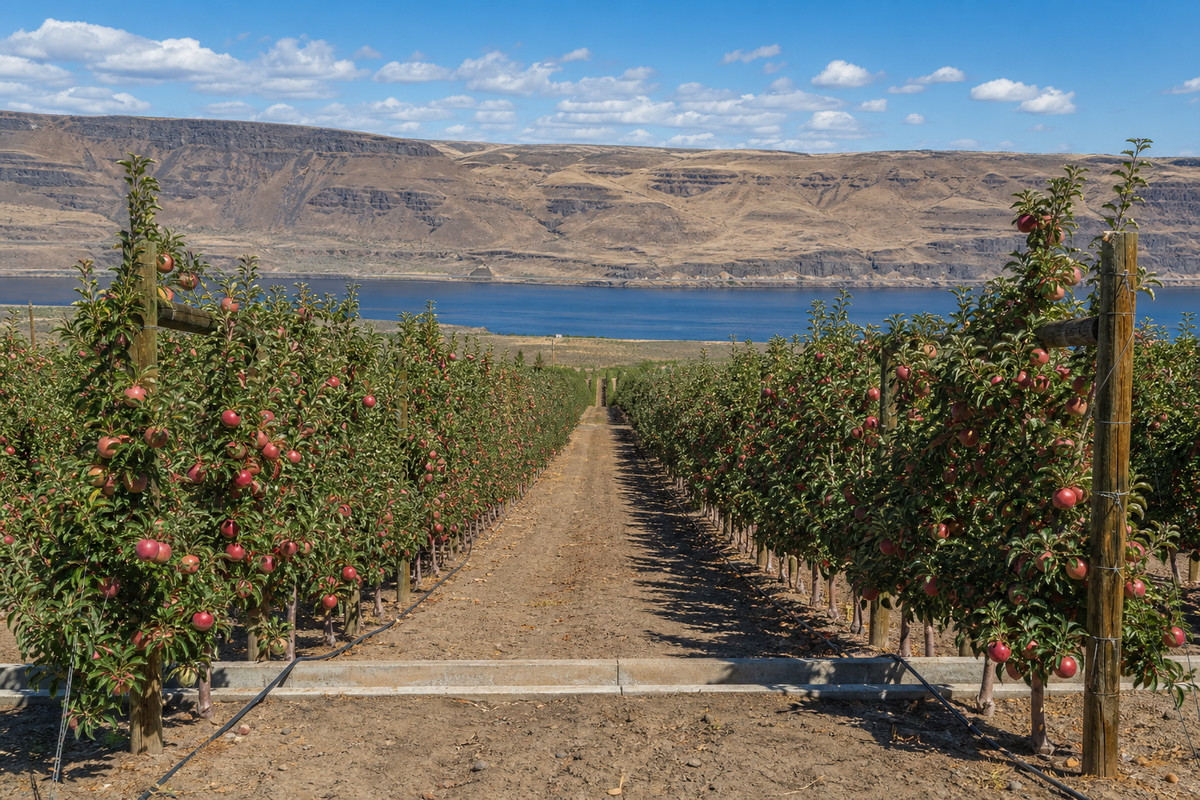
Central Washington: the Yakima Valley, Wenatchee and the Columbia Basin
Over the pass and onto the dry side.
Every delivery to Central Washington crosses the Cascades first. Snoqualmie Pass on I-90 and Stevens Pass on US-2 both close for avalanche control in winter and both run traction and chain requirements for days at a stretch, and White Pass on US-12 is quieter but no different in character. Winter pass conditions can delay deliveries. Once you are over, the ground is nothing like the west side. This is shrub steppe and irrigated desert. Out in the Columbia Basin around Quincy, Moses Lake, Othello and Royal City the constraints are the canal system and soft, sandy shoulders on the section roads, plus a blow sand season that can shut a highway outright. North on US-97 through Chelan, Pateros, Brewster and Omak the valleys narrow and the driveways get steep. And SR-20 over Rainy and Washington passes is gated shut every winter, which puts the Methow at Twisp and Winthrop on a seasonal route.
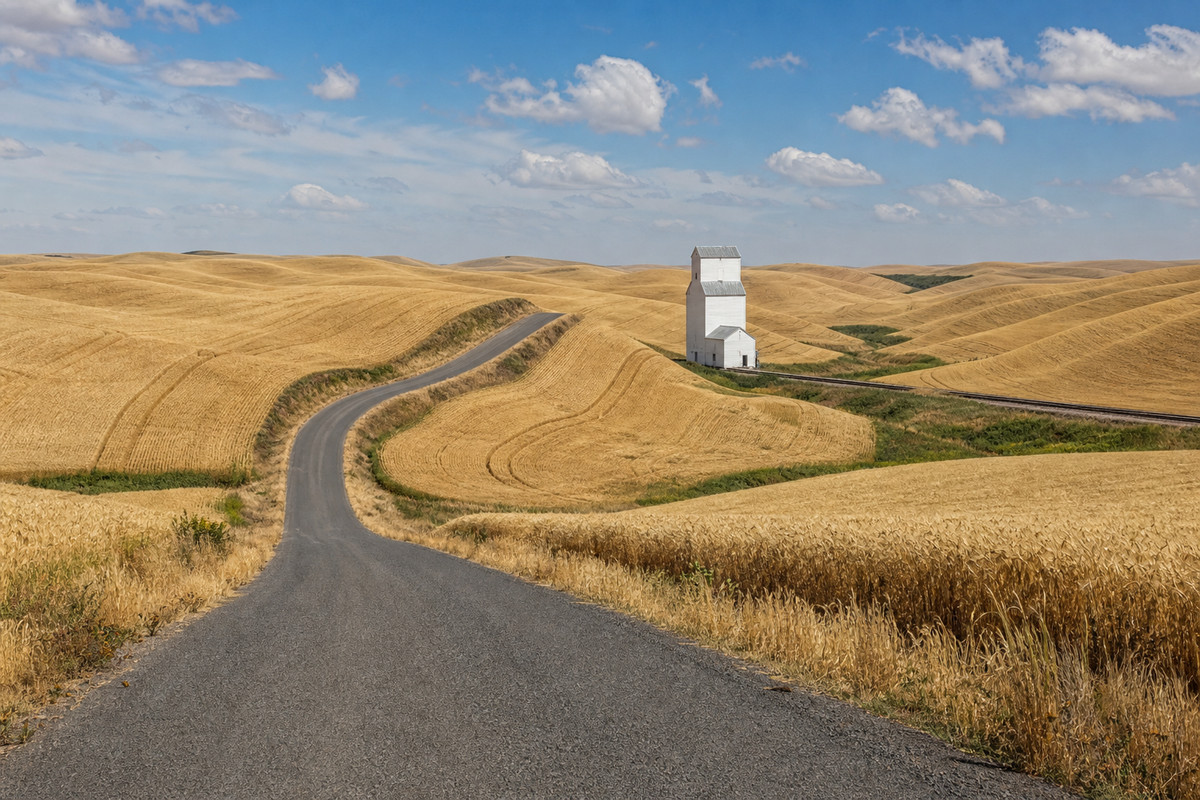
Spokane, the Inland Northwest and Southeast Washington
The far side of the state.
Spokane is 279 road miles from the depot. As of 6 August 2026, delivered prices here were $901 above Seattle's on every size and grade. Spokane, the Valley, Liberty Lake and Cheney sit on flat basalt and glacial outwash, which is firm ground to set a container on, and many sites are a straight pull with room to swing. South of there the Palouse is a different animal. Those hills are wind-blown loess, they are considerably steeper than they photograph, and a farm approach a pickup takes at speed can be a genuine problem for a loaded truck turning off US-195 or SR-27. The grade and the place where the truck turns around both matter. In spring, weight limits matter too, because county road departments across eastern Washington post seasonal load restrictions during the thaw, and a soft county road can be closed to a loaded truck while those are up.